In Qatar, the 2017 GCC Crisis thrust food security and autonomy into the limelight, catalysing a surge in local agriculture. To showcase this shift, a temporary exhibition has installed an urban farm and community gardens on the grounds of a historic school in the heart of Doha.
The landscape is one of striking contrasts: broccoli and alfalfa fields sit against views of a traffic-heavy overpass, while eggplants and tomatoes overtake abandoned basketball courts. Between two rusty volleyball posts, a passion fruit tree weaves a new kind of net.
Within this large-scale experiment, two worlds collide. On one side, the industrial path focuses on output. Here, engineers and agricultural workers utilise conventional pesticides and nutrient-fed hydroponic systems to optimise the urban farm’s yield. On the other side, the organic path focuses on connection. A group of gardening enthusiasts tames the desert soil through natural methods, growing flowers and vegetables to take home and cook with their families.
Basateen Al Fereej بساتين الفريج in Arabic, means “Gardens of the Neighbourhood”.
—
Countryside: A Place to Live, Not to Leave, was presented by Qatar Museums, in collaboration with AMO led by Samir Bantal and Rem Koolhaas, at both Qatar Preparatory School and the National Museum of Qatar, from 29 October 2025 to 25 July 2026.
—
This body of work was developed during the Frame & Focus II Advanced Photography Course, an intensive 14-week programme organised by Tasweer Photo Festival, The VII Foundation, Qatar Preparatory School and Qatar Museums. The project’s conceptualisation, narrative structure and sequencing were deeply enriched by the generous critique and mentorship of my advisors from The VII Foundation, including Ziyah Gafić, Gary Knight, Marie Sumalla, Yannis Kontos and Rola Khayyat.
The series is currently featured in the Frame & Focus II group exhibition at Alhosh Gallery (One Porto Arabia – Tower 1, The Pearl, Doha), co-curated by Abdulla Faisal Al-Khalaf, from 5 September to 5 October 2026.
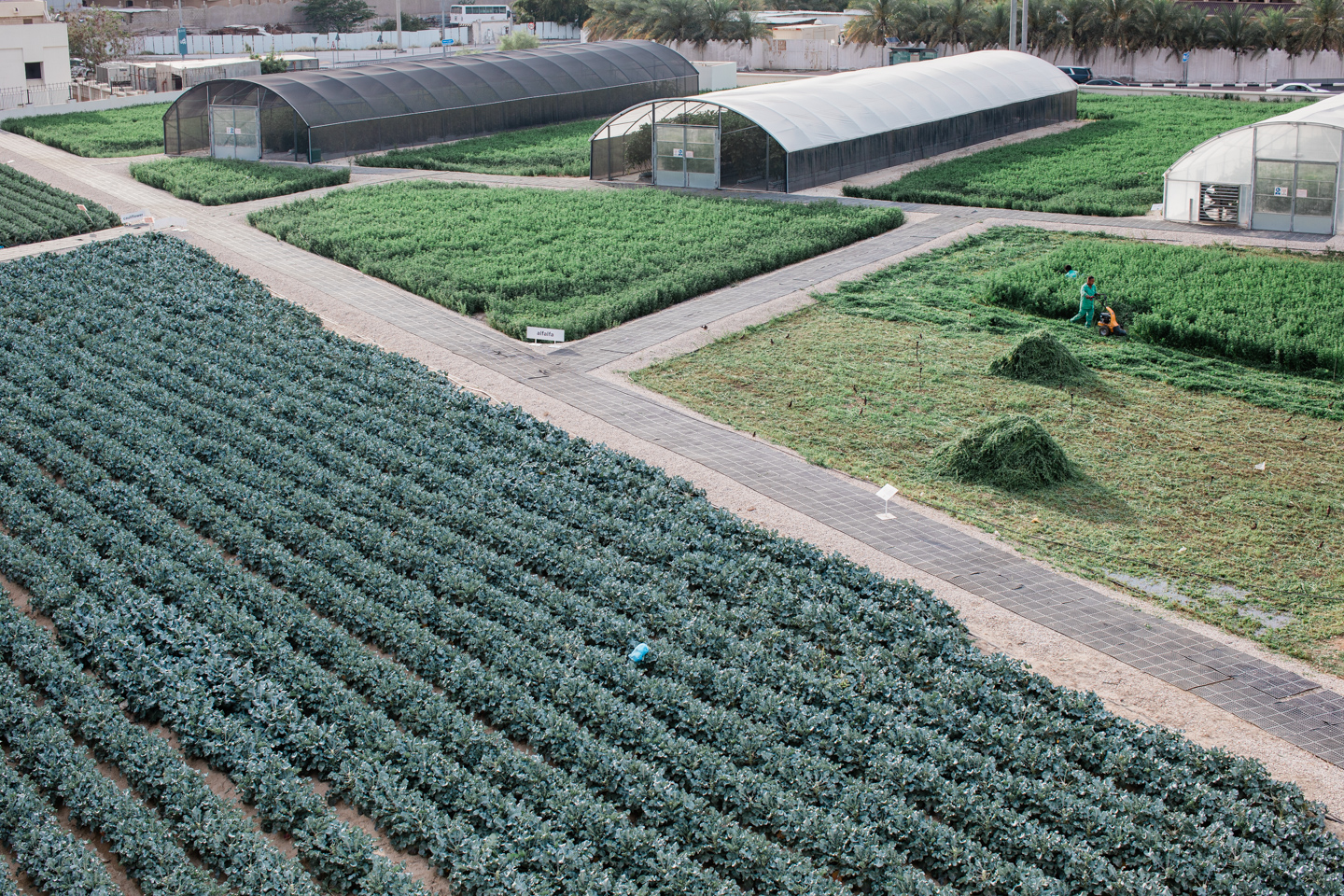 DOHA, Qatar — Agricultural workers Nahid and Tul, from Bangladesh, harvest alfalfa at an urban farm established for the Countryside exhibition at the Qatar Preparatory School (QPS), Friday, April 17, 2026. The site highlights Qatar’s pivot toward food sovereignty following the 2017 diplomatic blockade. Previously dependent on imports for nearly 90% of its food supply, the country has since industrialized its local dairy and poultry sectors. Alfalfa production remains a critical link in this new circular economy, serving as essential fodder for the nation’s growing livestock herds. (CHRISTOPHE BUFFET)
 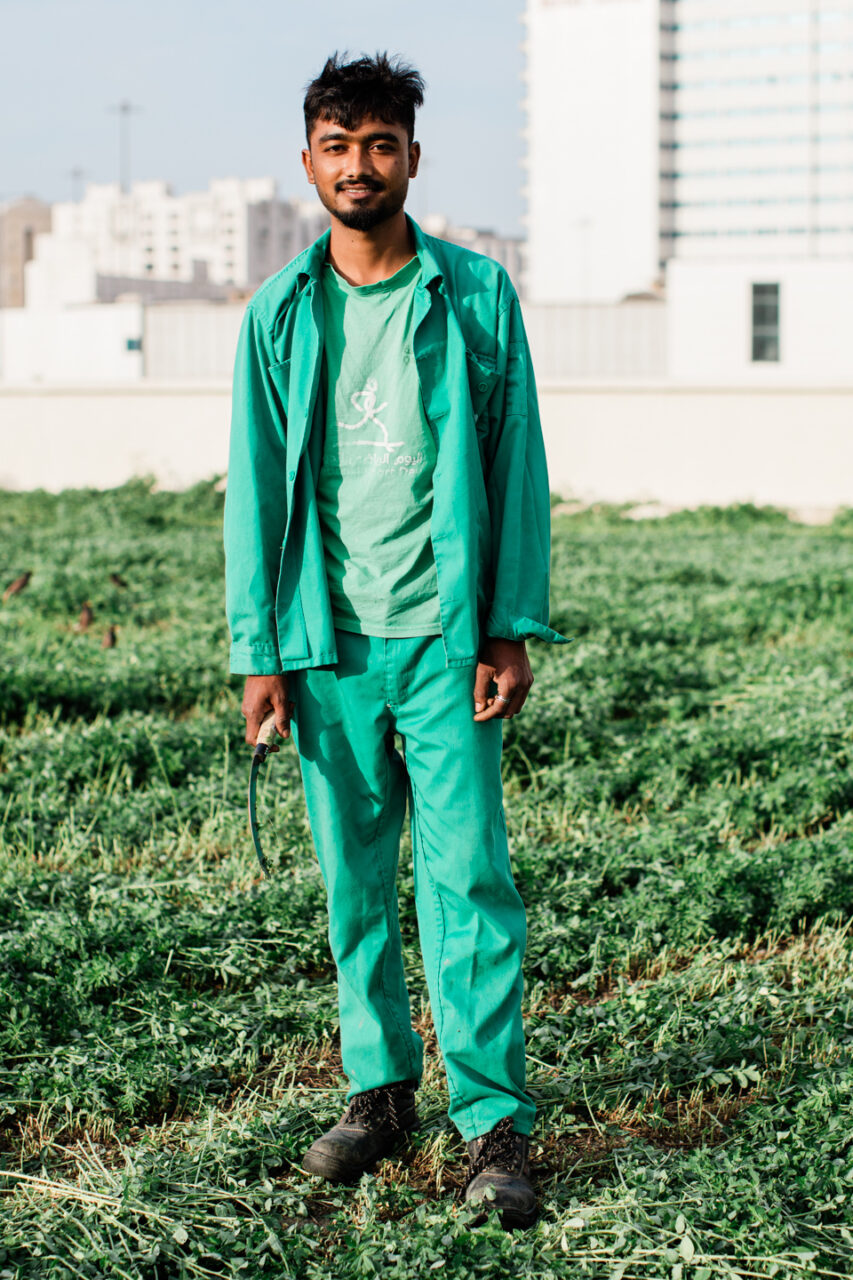 DOHA, Qatar — Nahid, an agricultural worker from Bangladesh, pauses for a portrait while harvesting alfalfa at the Qatar Preparatory School (QPS), Friday, April 17, 2026. In the background, a hotel overlooks the experimental urban farm created for the Countryside exhibition. (CHRISTOPHE BUFFET)
 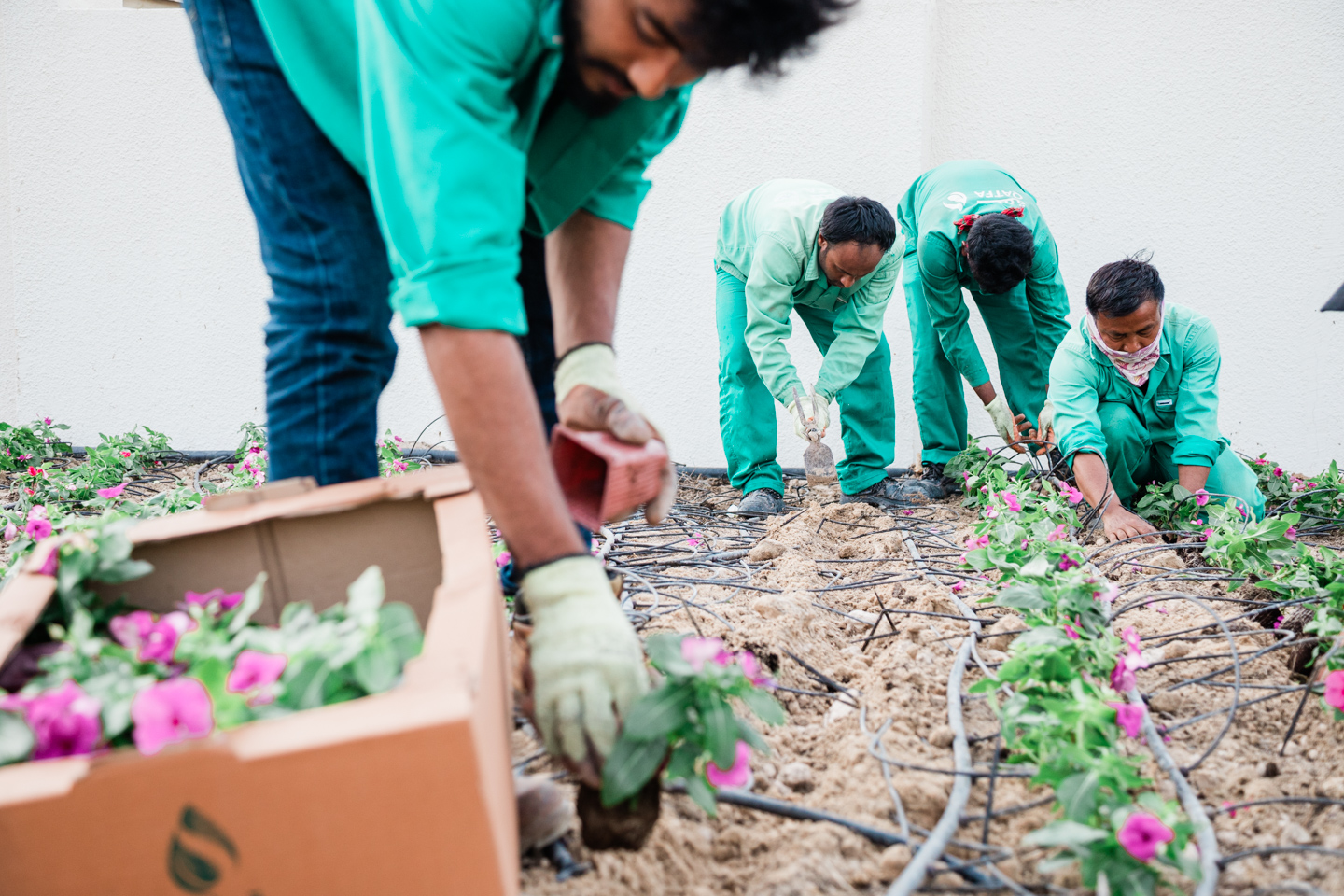 DOHA, Qatar — Agricultural workers from Bangladesh and Nepal plant vincas at the Qatar Preparatory School (QPS) urban farm, Friday, April 10, 2026. The site, a modernist landmark currently being transformed into a vocational and creative hub, serves as a laboratory for urban greening in a desert environment. As Doha prepares for its arid summer, the installation highlights the critical role of constant irrigation in sustaining the city’s burgeoning landscape projects. (CHRISTOPHE BUFFET)
 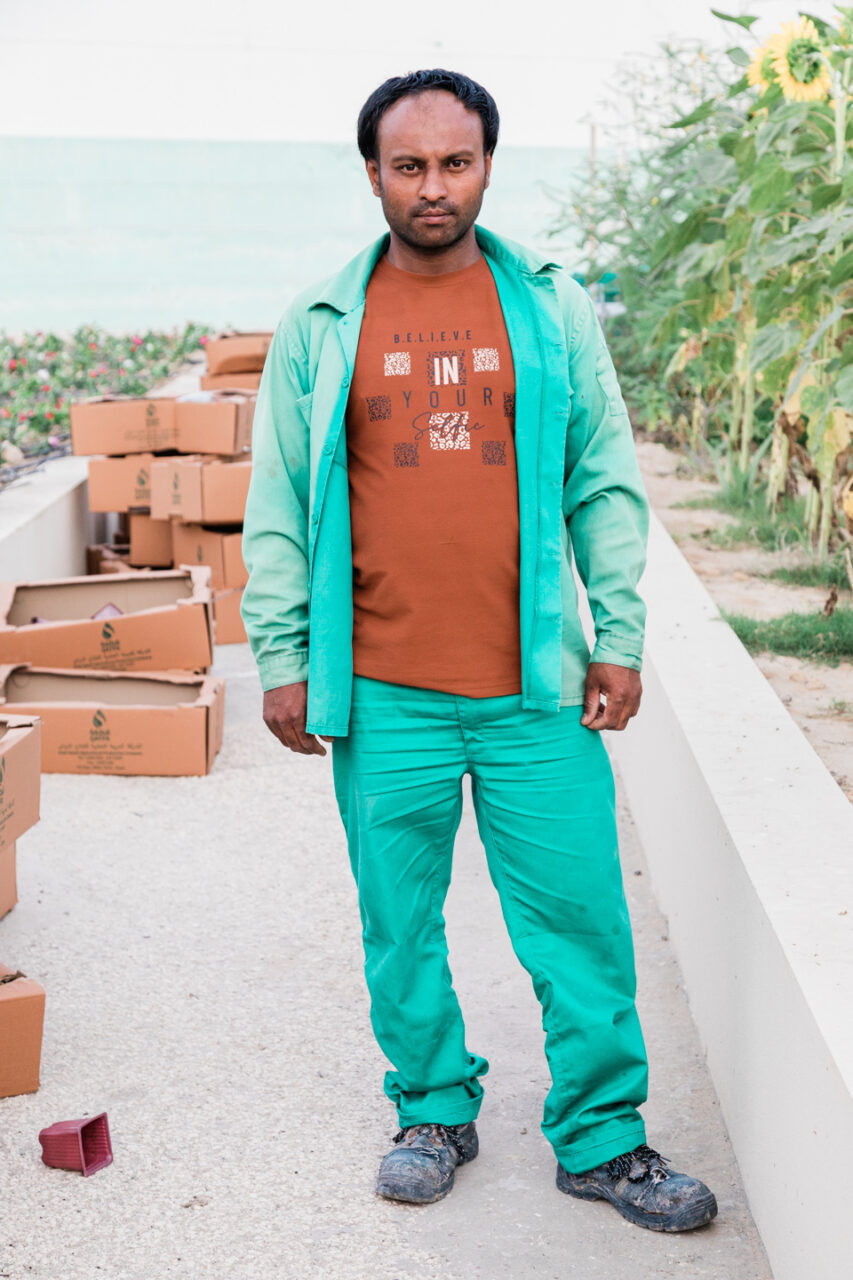 DOHA, Qatar — Nishtar, an agricultural worker from Bangladesh, pauses while planting vincas at the Qatar Preparatory School (QPS) urban farm, Friday, April 10, 2026. (CHRISTOPHE BUFFET)
 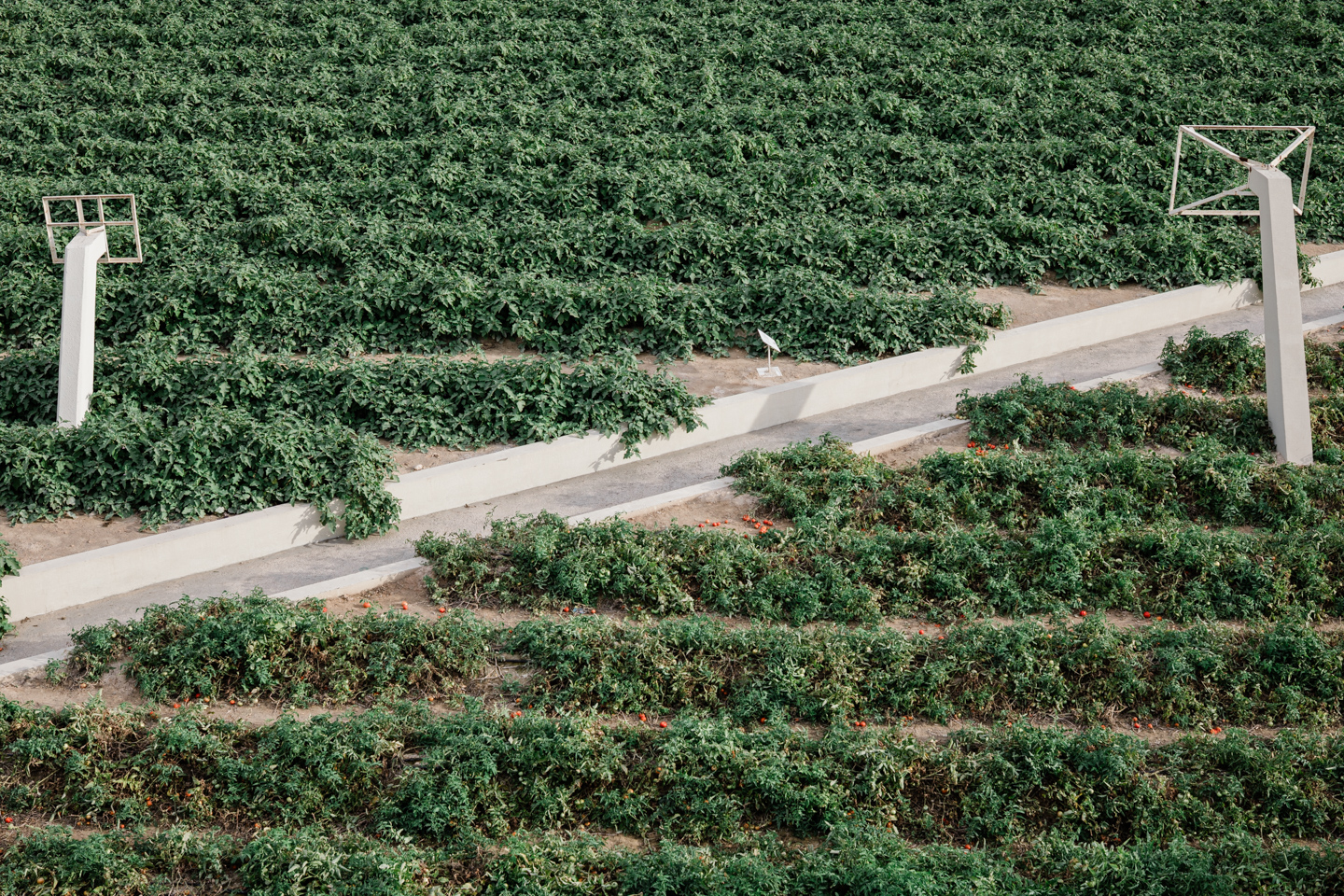 DOHA, Qatar — Ripe tomatoes and eggplants grow on the former basketball courts of the Qatar Preparatory School (QPS), seen from the campus rooftop, Friday, April 17, 2026. This agricultural installation, where crops surround skeletal backboard frames, is a centerpiece of the Countryside exhibition’s urban farm. The site repurposes a historic educational landmark into a laboratory for food security, reflecting the emirate’s intensified focus on local production following the geopolitical shifts of 2017. (CHRISTOPHE BUFFET)
 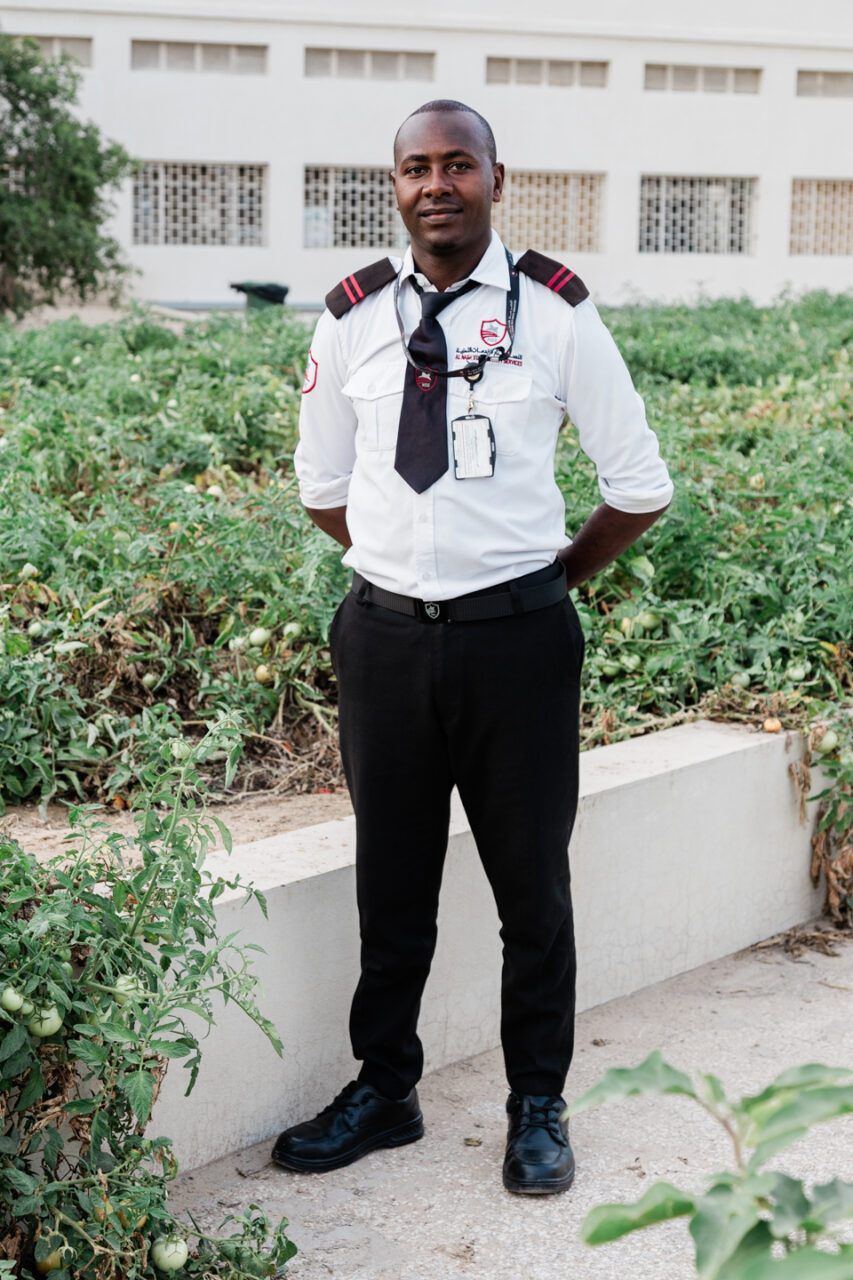 DOHA, Qatar — Paul, a security guard from Kenya, stands before tomato crops at the Qatar Preparatory School (QPS) urban farm, Friday, April 10, 2026. “Before coming here, I was working as a technician on electrical installations. And before that, as a farmer. I decided to come here because I need capital. I will go back to my country when I finish my contract to start my business.” he says. (CHRISTOPHE BUFFET)
 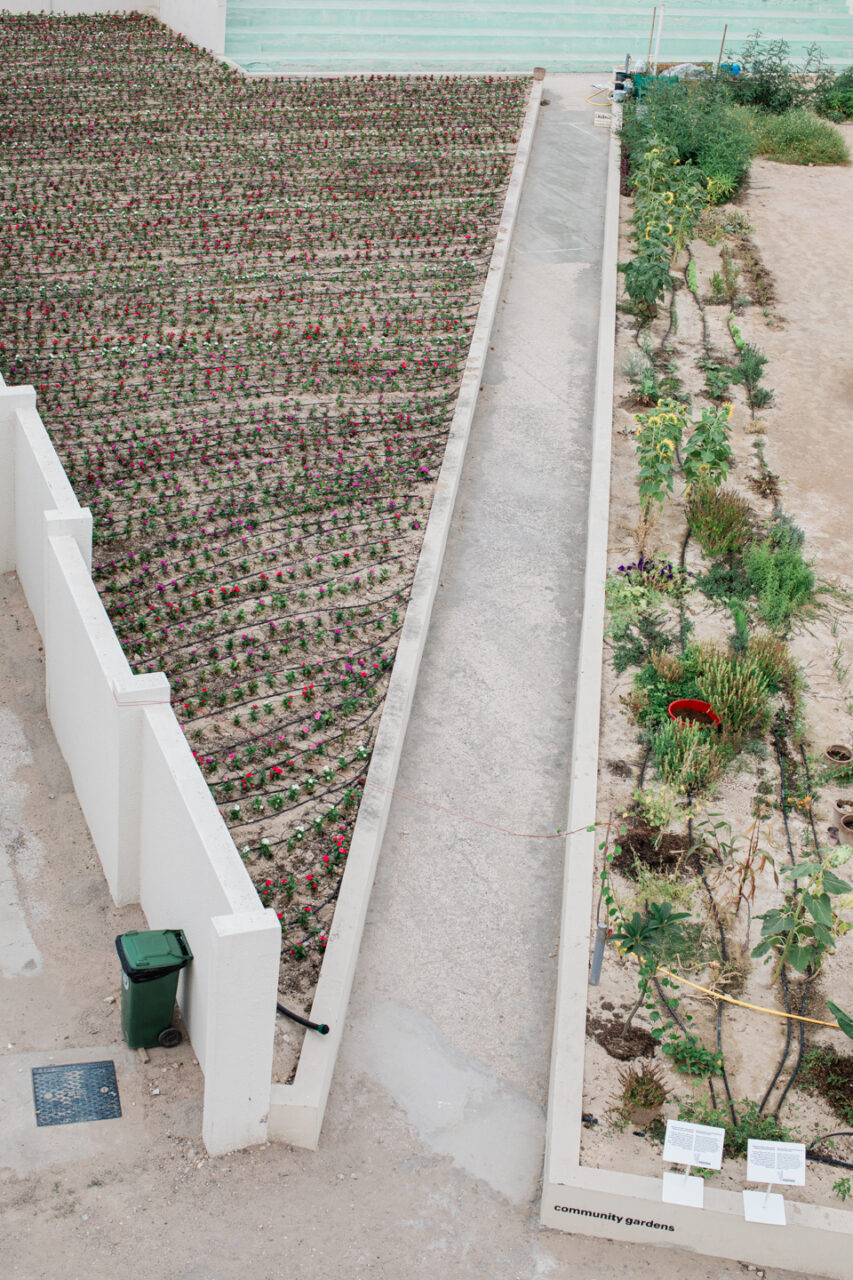 DOHA, Qatar — A study in horticultural contrasts is seen at the Qatar Preparatory School (QPS) urban farm, Friday, April 17, 2026. To the left, structured rows of vincas planted by the site's agricultural staff face a more organic arrangement of aromatic plants and sunflowers cultivated by the Hadiqaa community to the right. (CHRISTOPHE BUFFET)
 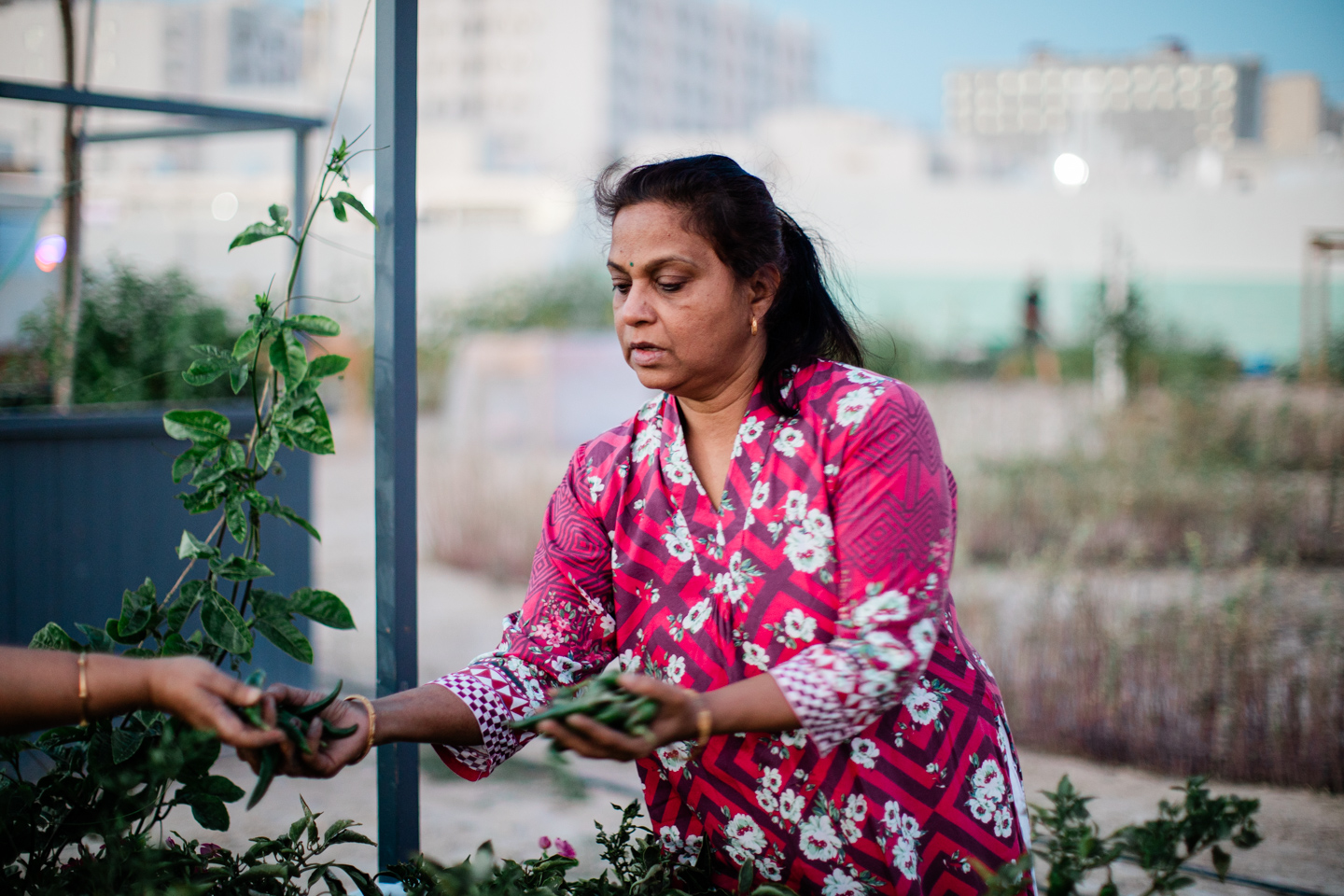 DOHA, Qatar — Sujan, an Indian expatriate, shares chilies she has just harvested at the Qatar Preparatory School (QPS) community gardens, Saturday, April 18, 2026. Lacking a garden at her apartment, she visits the urban farm up to five times a week to pursue her interest in horticulture. "Gardening is my passion. So I like to spend some time here with the plants." she says. Her involvement highlights the role of the QPS, a historic school repurposed as a vocational and creative hub, in providing community green spaces in Doha. (CHRISTOPHE BUFFET)
 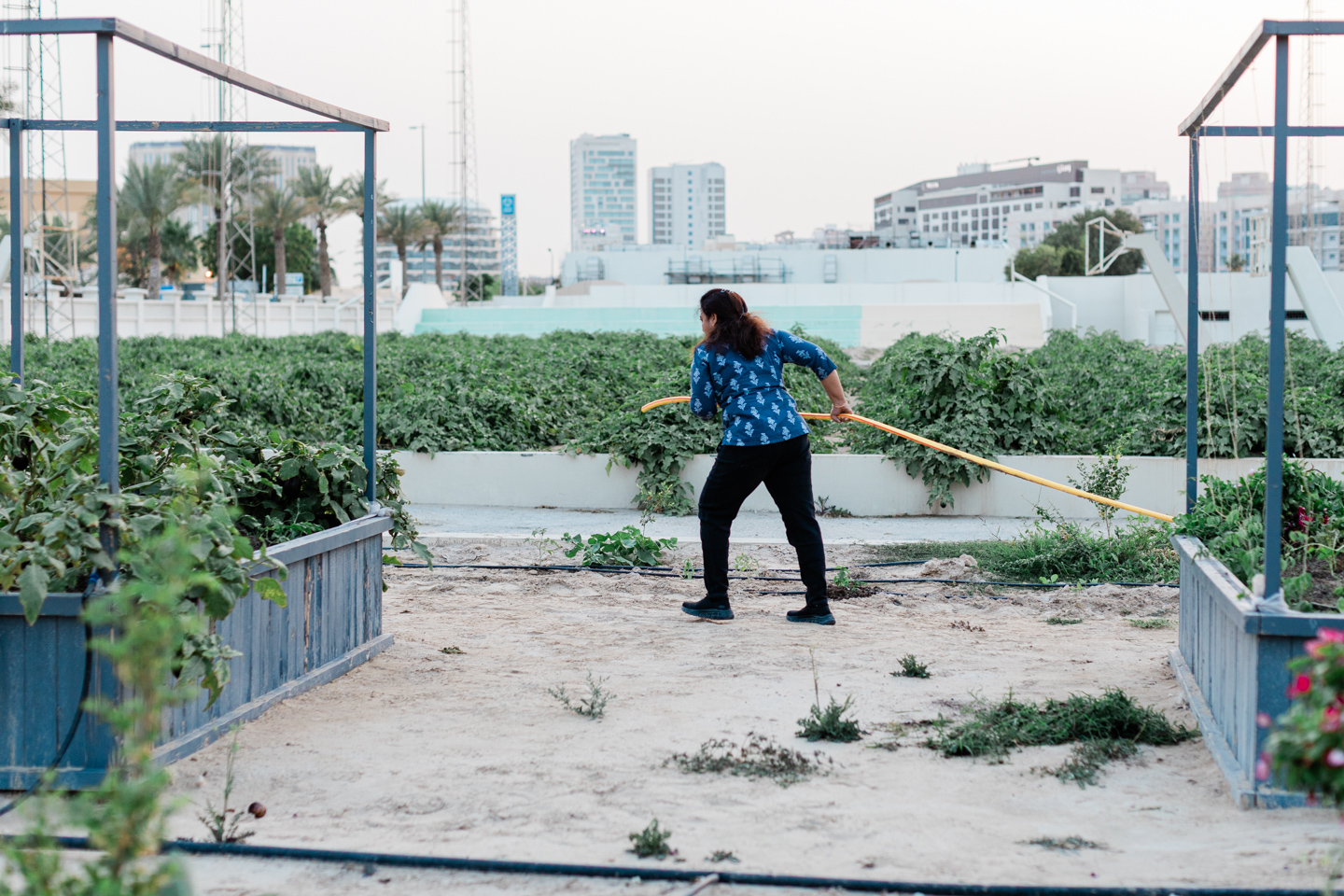 DOHA, Qatar — Nimmy, an Indian expatriate, maneuvers a long yellow hose to water the community gardens at the Qatar Preparatory School (QPS), Saturday, May 2, 2026. In the middle ground, rows of eggplants from the urban farm flourish against a backdrop of residential buildings. The image captures the daily maintenance required to sustain green pockets in an arid climate. (CHRISTOPHE BUFFET)
 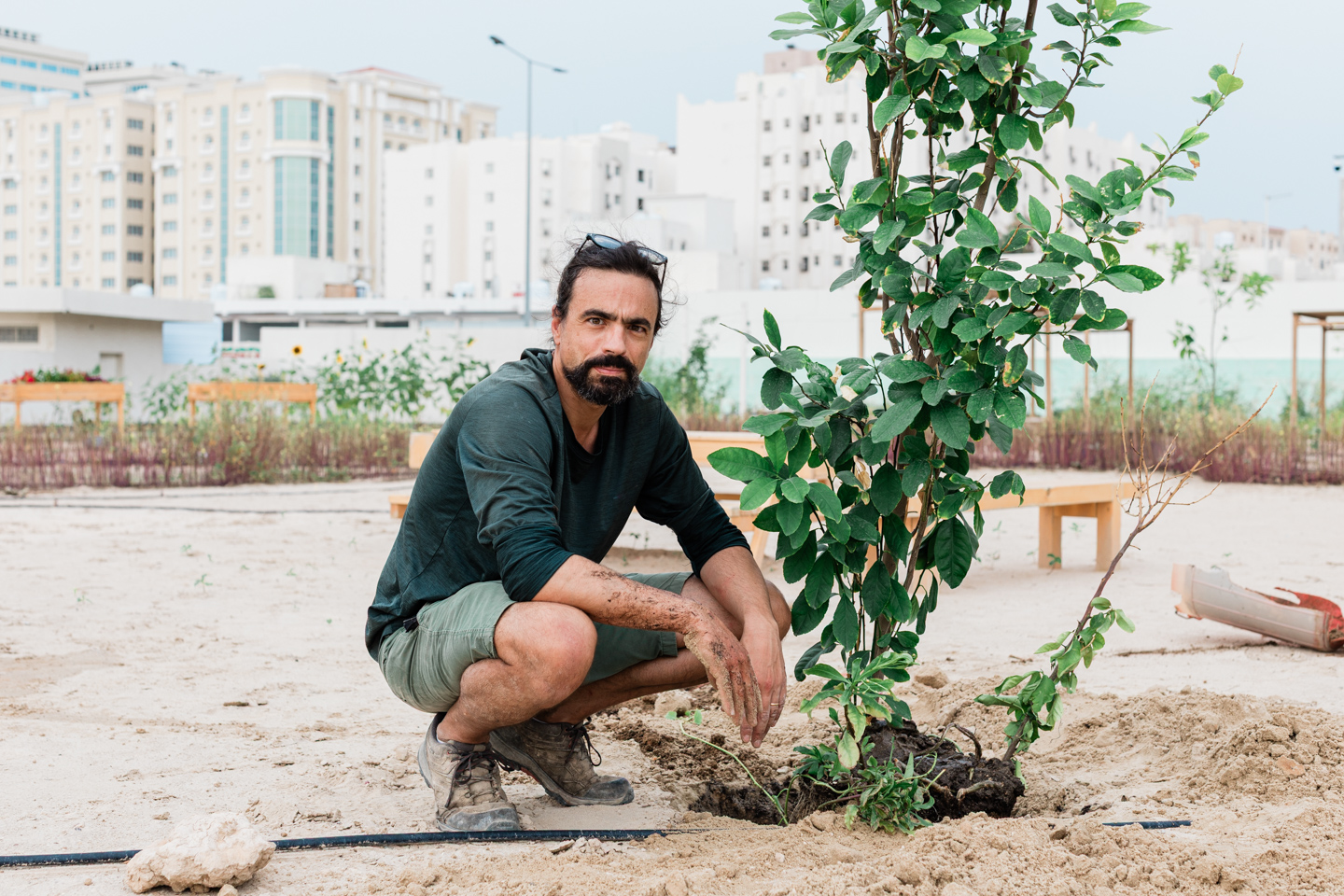 DOHA, Qatar — Guillaume de Vaulx, a French resident in Qatar, poses beside a lemon tree he planted with members of the Hadiqaa community at the Qatar Preparatory School (QPS) urban farm, Saturday, April 4, 2026. A scholar with a PhD in Islamic philosophy and a background in biology, de Vaulx previously led the agricultural department at the Heenat Salma organic farm and managed nature conservation projects in Lebanon. His work at the QPS vocational hub reflects a synthesis of philosophy and environmental science. (CHRISTOPHE BUFFET)
 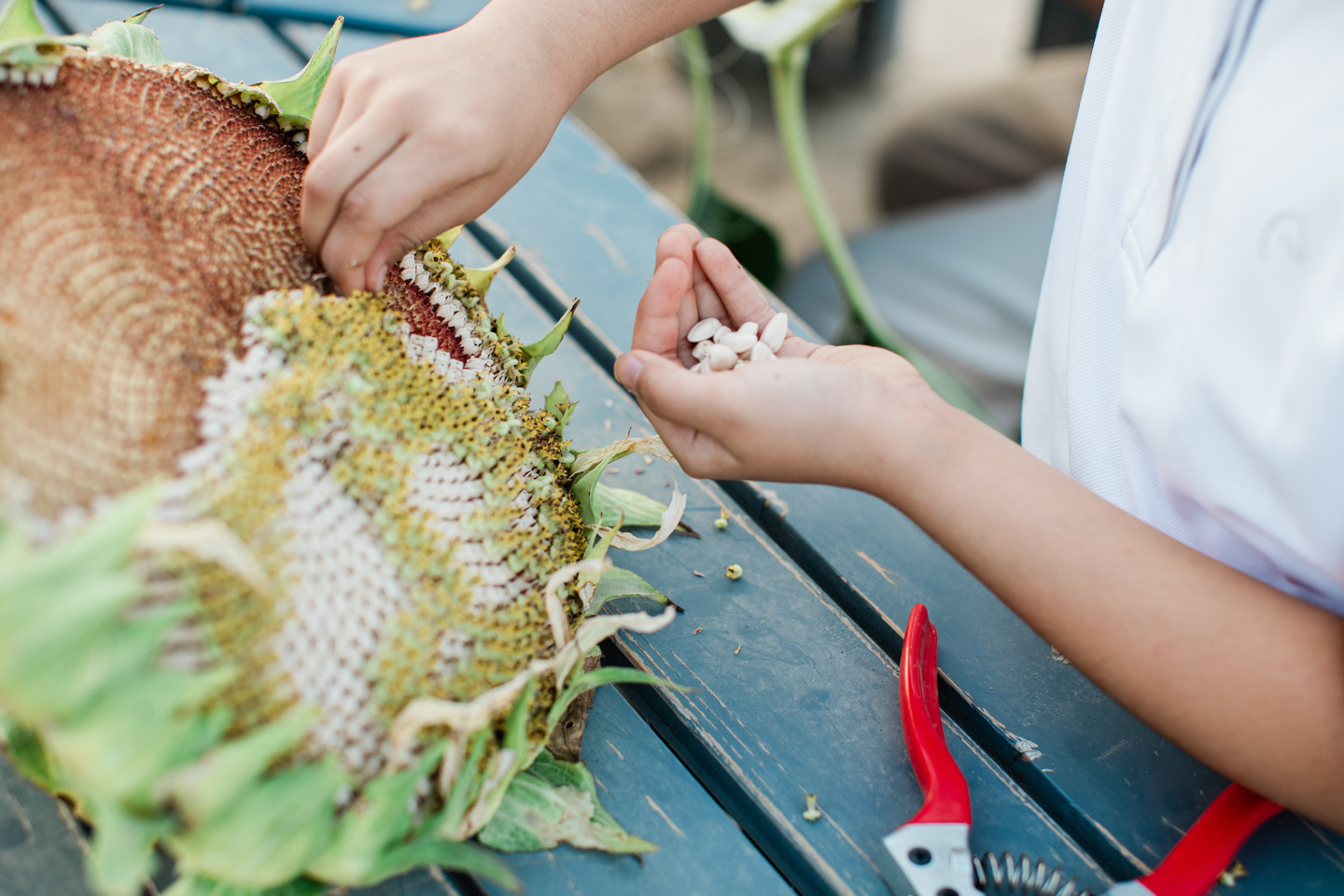 DOHA, Qatar — Children gather sunflower seeds at the Qatar Preparatory School (QPS) community gardens, Saturday, May 2, 2026. The photograph captures the harvest as seeds are picked by hand and collected on a table near a pair of red secateurs. This moment of discovery at the historic school-turned-vocational-hub reflects the project's mission to re-establish a tangible link between urban youth and the environment. (CHRISTOPHE BUFFET)
 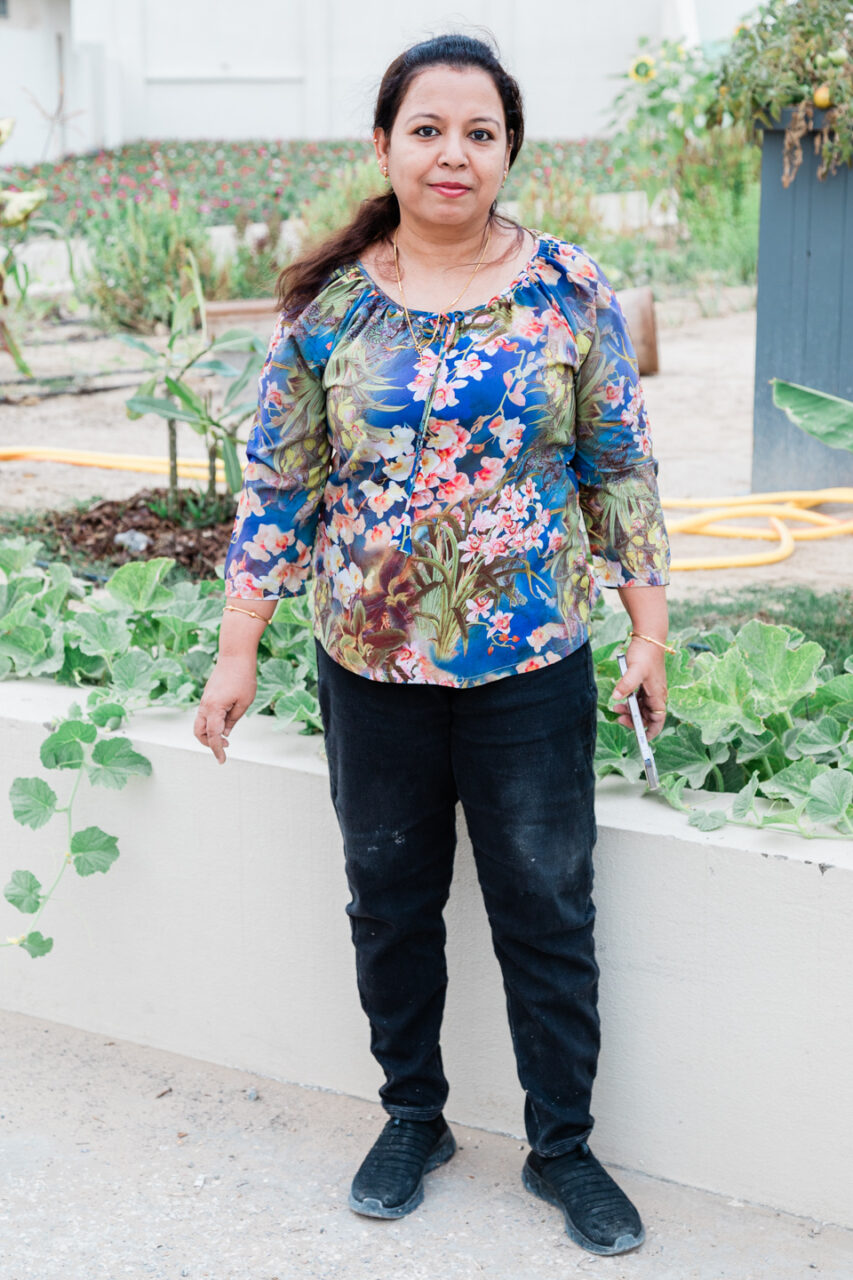 DOHA, Qatar — Nimmy, an Indian expatriate, poses at the Qatar Preparatory School (QPS) community gardens, Saturday, April 11, 2026. Set within a historic educational landmark, these gardens provide a platform for urban agriculture and community exchange. (CHRISTOPHE BUFFET)
 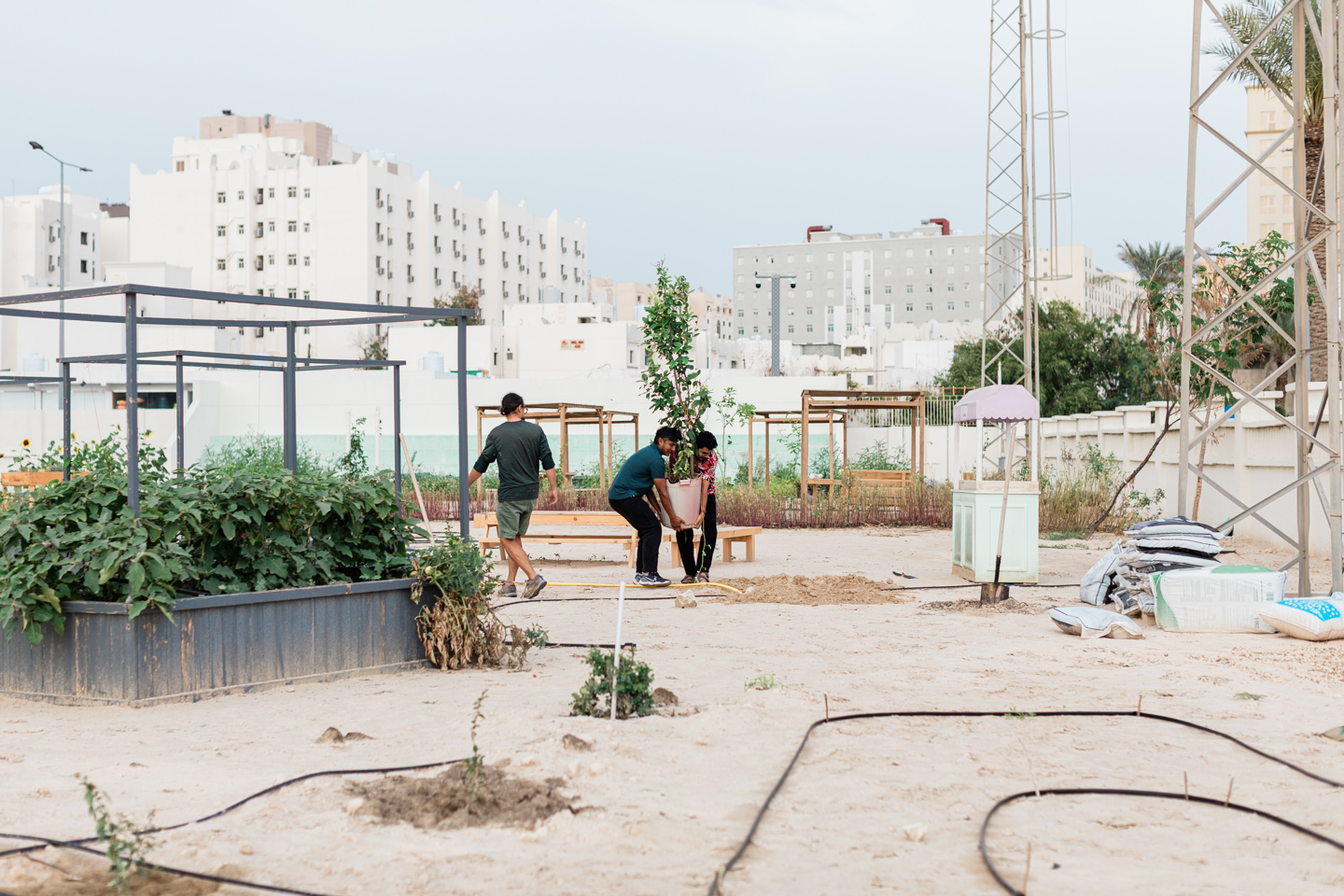 DOHA, Qatar — Guillaume, from France, walks by Sajeer and Shaneem, both from India, as they carry a lemon tree to be planted in the community gardens at the Qatar Preparatory School (QPS), Saturday, April 4, 2026. In the background, CCTV cameras and residential buildings frame the scene. (CHRISTOPHE BUFFET)
 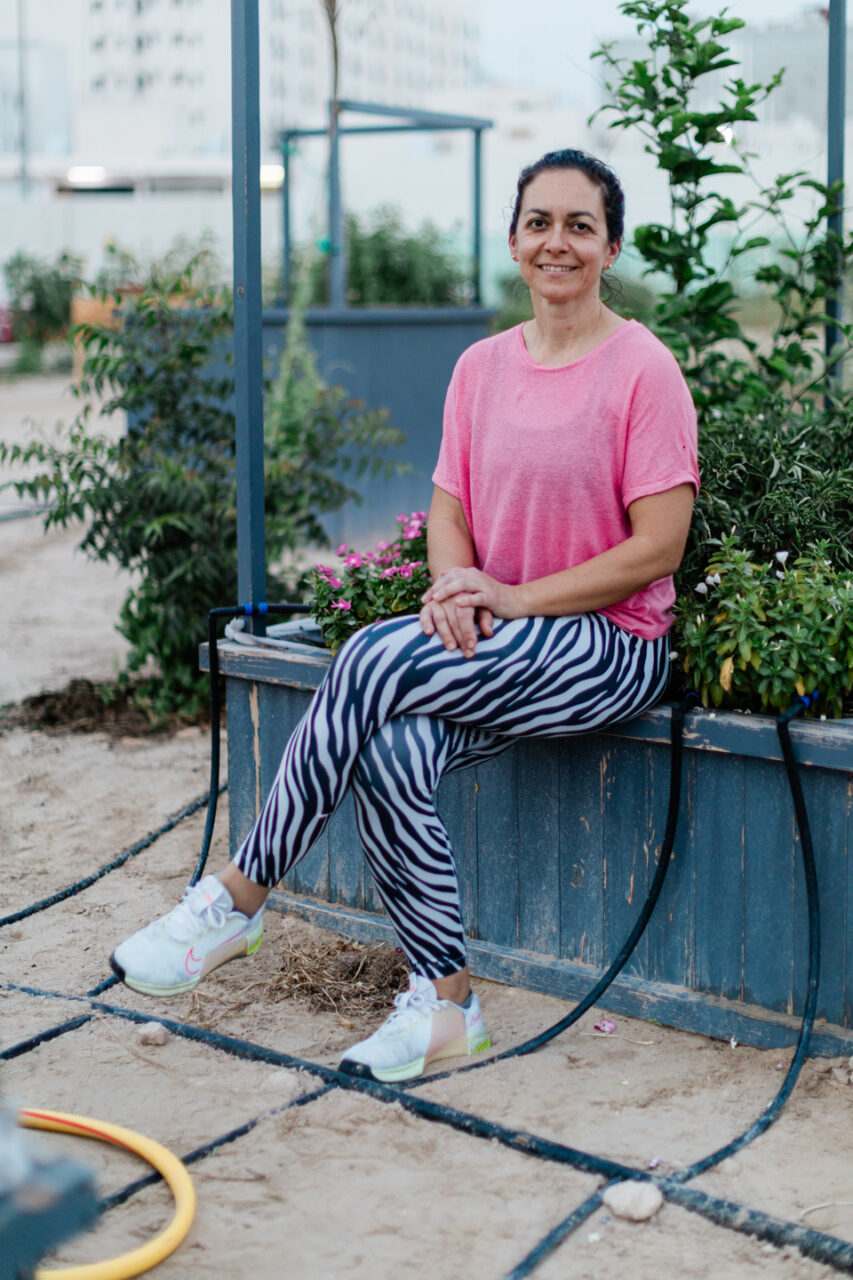 DOHA, Qatar — Vicky Damalou, from Greece, agronomist and co-founder of Hadiqaa, poses at the community gardens of the Qatar Preparatory School (QPS), Monday, April 27, 2026. Her organization focuses on fostering environmental stewardship and urban agriculture within Qatar’s landscape. By transforming the grounds of the historic educational landmark into a shared green space, the project encourages community engagement and sustainable living practices in the heart of the capital. (CHRISTOPHE BUFFET)
 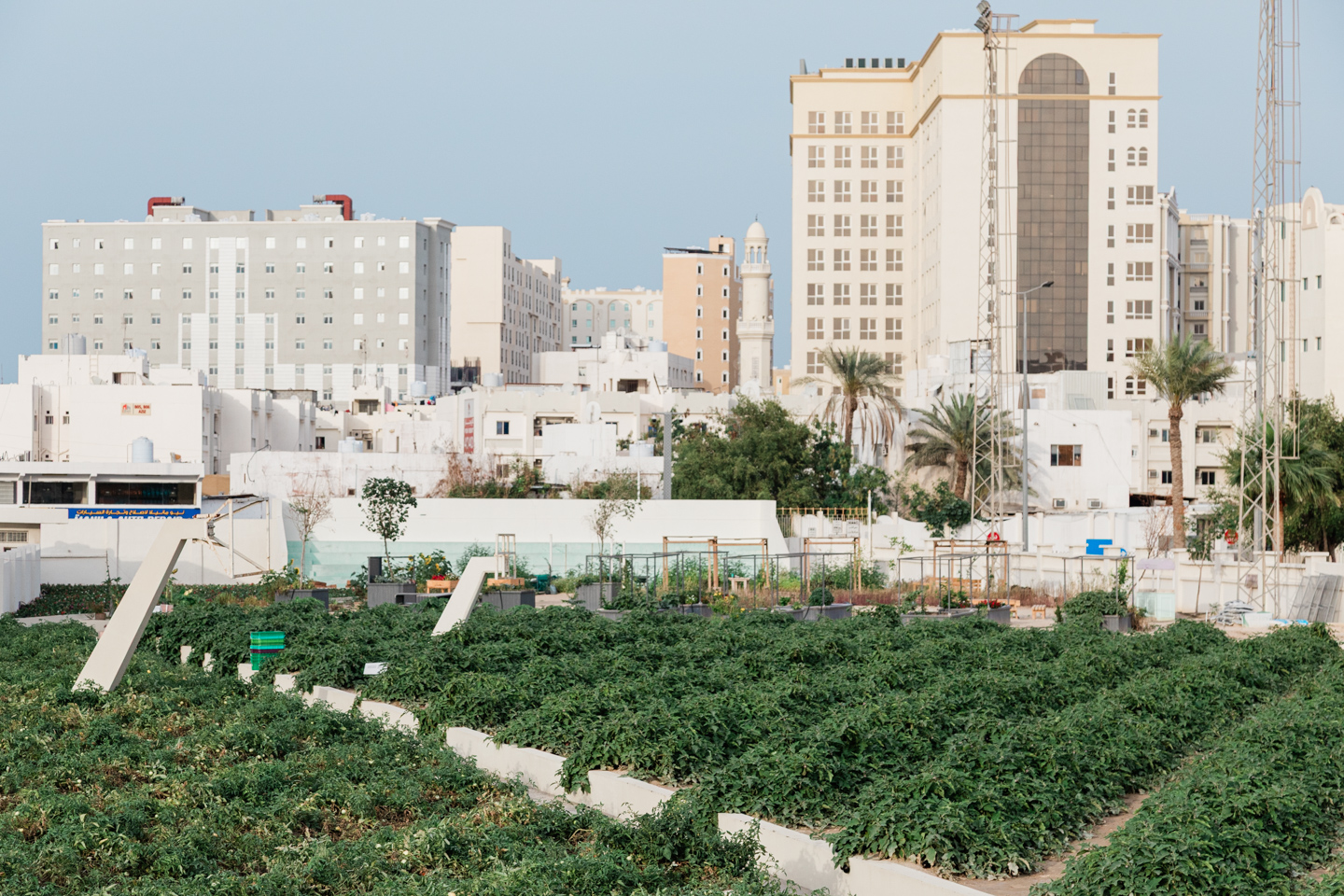 DOHA, Qatar — Empty green crates await an eggplant harvest on a former basketball court at the Qatar Preparatory School (QPS) urban farm, Friday, April 10, 2026. Behind the raised beds of the Hadiqaa community gardens, the silhouette of a minaret and residential buildings highlight the contrast between local agriculture and the dense urban fabric of the Qatari capital. The project, featured in the Countryside exhibition, illustrates Qatar’s strategic shift toward local food production and community-led greening initiatives. (CHRISTOPHE BUFFET)